Understanding simple predicates is essential for improving your writing skills. A simple predicate is the main verb or verb phrase in a sentence that tells what the subject is doing or being.
For example, in the sentence “She eats apples,” the simple predicate is “eats.” It shows the action that the subject, “She,” is performing. Identifying simple predicates can help you create clear and concise sentences.
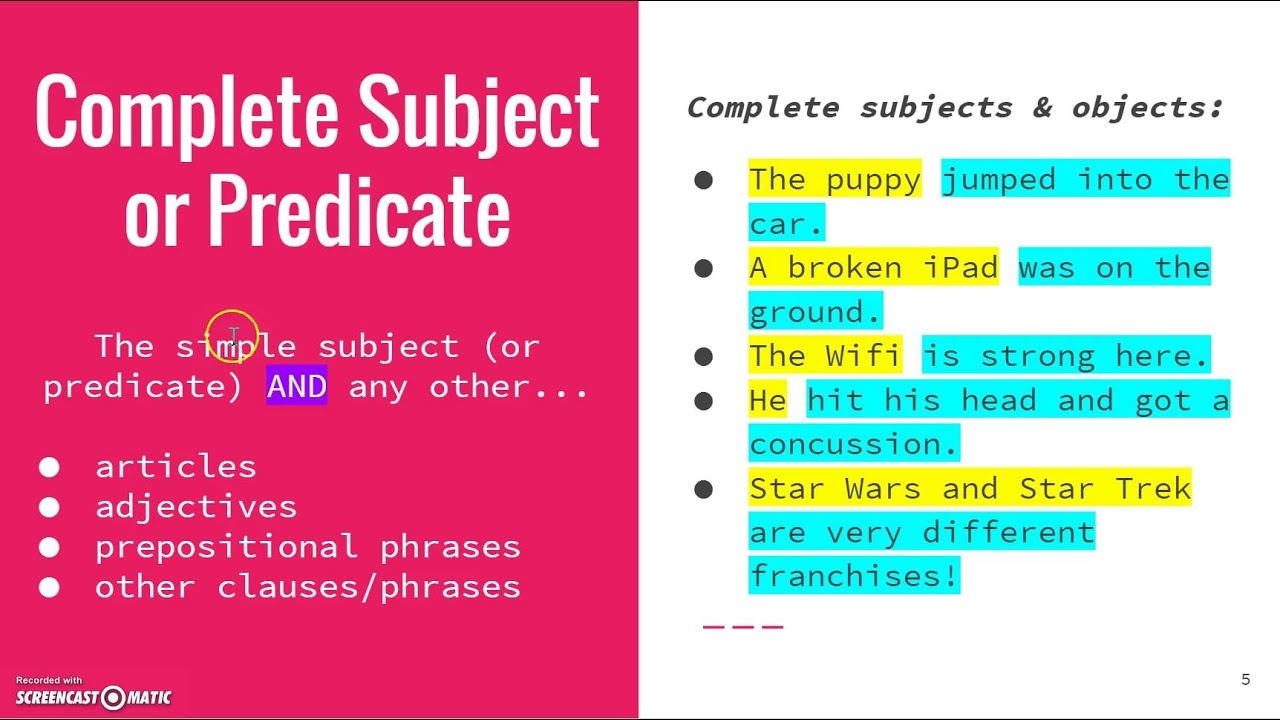
examples of simple predicates
Examples of Simple Predicates
In the sentence “He runs every morning,” the simple predicate is “runs.” It describes the action that the subject, “He,” is doing. Simple predicates are crucial for understanding the basic structure of sentences.
Another example is in the sentence “They are watching a movie.” The simple predicate is “are watching,” which shows the ongoing action that the subject, “They,” is currently engaged in.
Simple predicates can also include linking verbs, such as “is,” “am,” “are,” “was,” “were,” “be,” “being,” and “been.” These verbs link the subject to a description or a state of being, rather than showing action.
For instance, in the sentence “She is happy,” the simple predicate is “is happy.” The linking verb “is” connects the subject, “She,” to the description “happy.” Identifying linking verbs as simple predicates can enhance your understanding of sentence structure.
In conclusion, recognizing simple predicates is fundamental for constructing clear and effective sentences. By identifying the main verb or verb phrase that tells what the subject is doing or being, you can improve the clarity and coherence of your writing. Practice identifying simple predicates to enhance your writing skills and communicate more effectively.
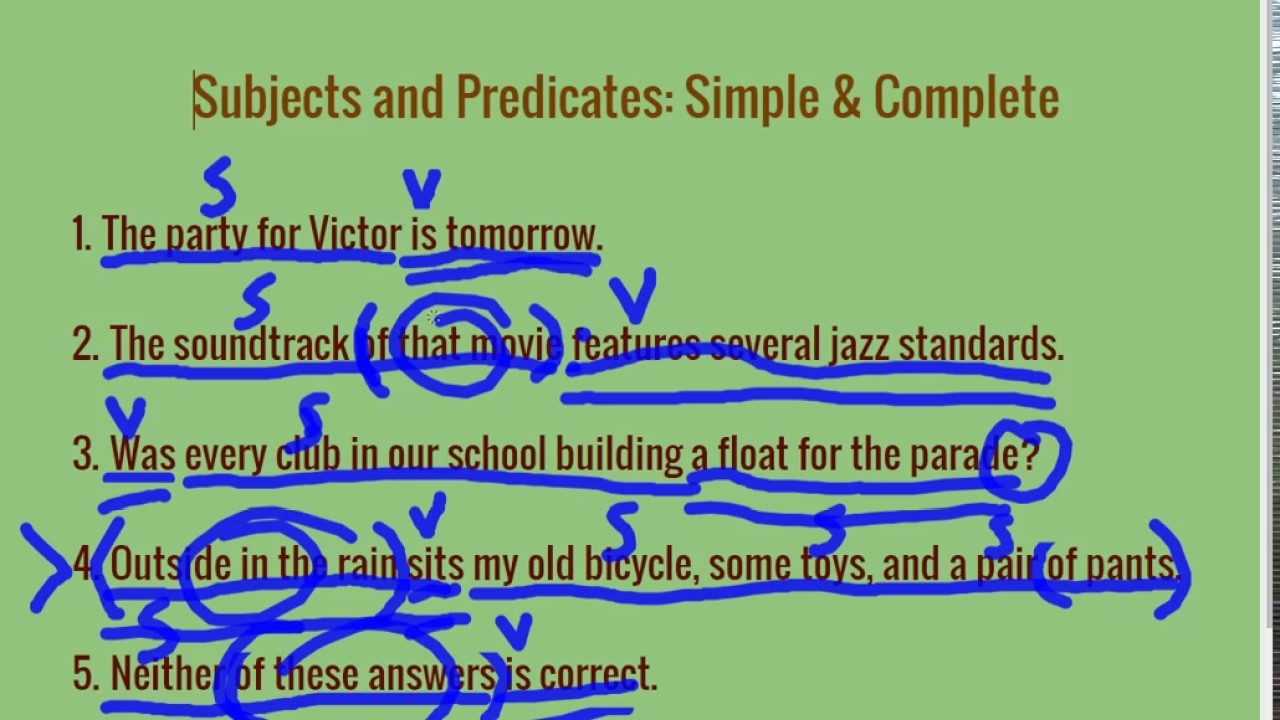
How To Subjects And Predicates Simple Complete YouTube
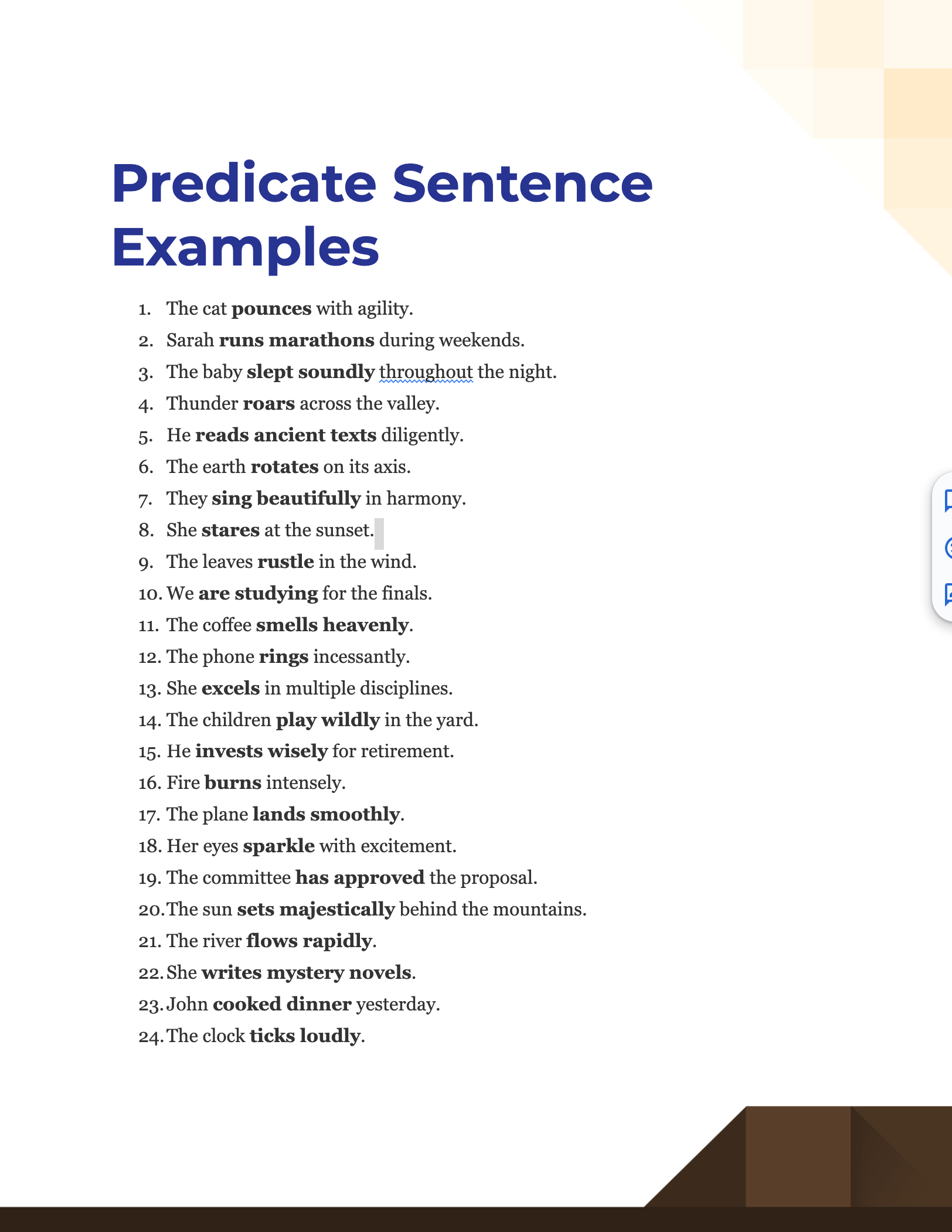
99 Predicate Sentence Examples
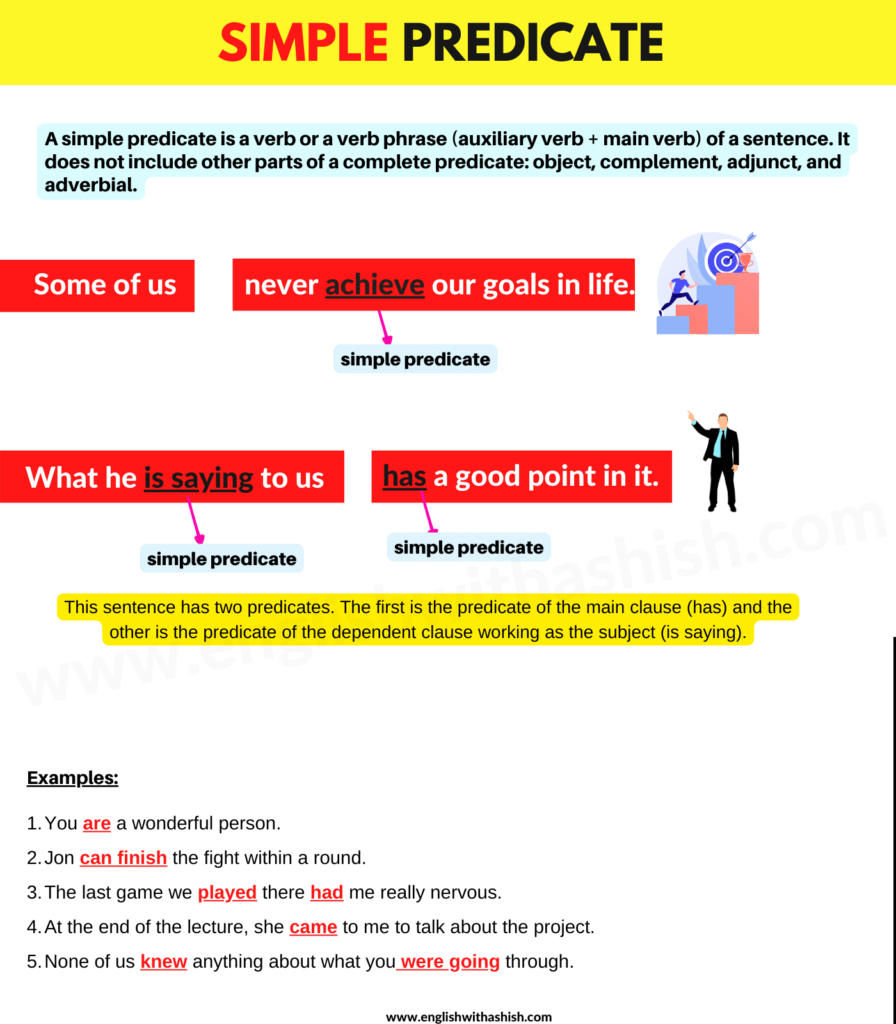
Simple Predicate Masterclass English With Ashish
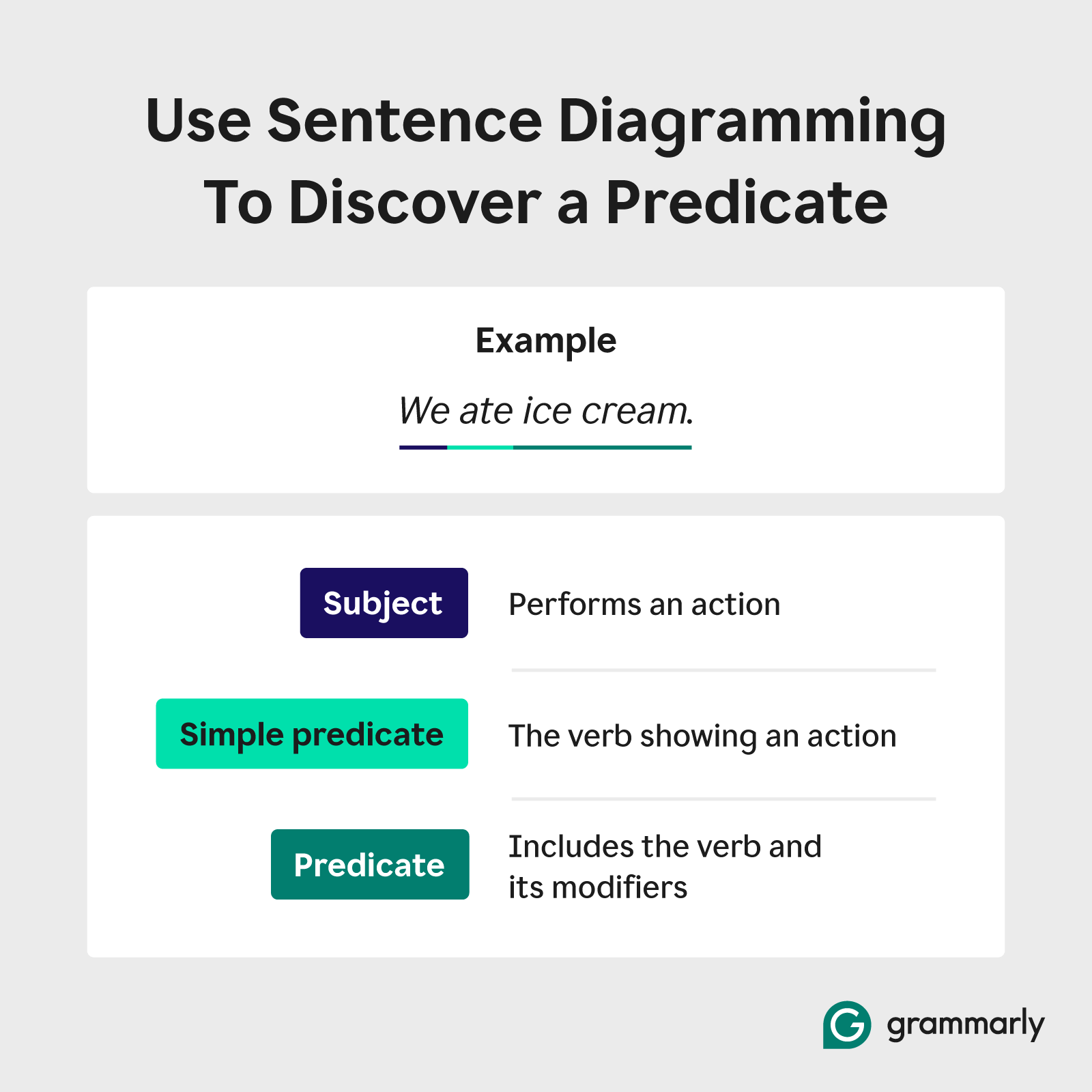
Predicate Definition Usage And Examples Grammarly